

Catalytic Converter Replacements
Catalytic Converter Symptoms: Power Loss, Smoke & Fault Codes
Experiencing power loss, warning lights or excessive exhaust smoke? Learn the signs of catalytic converter failure and available repair options.
Replace Catalytic Converters
e-CAR The Trusted Experts
Need catalytic converter replacement? e-CAR experts handle emissions parts with genuine quality & fast turnaround.
Schedule Your Catalytic Converter Replacement Today
Don’t let a faulty Converter affect your drive. Schedule your car converter replacement with an e-CAR branch and experience the difference professional service makes.
Schedule Your Catalytic Converter Replacement Appointment Today
Don’t let a faulty Catalytic Converter affect your drive. Schedule your car converter replacement with an e-CAR branch and experience the difference professional service makes.
Catalytic Converters
Should You Keep it or Remove it from Your Exhaust System?
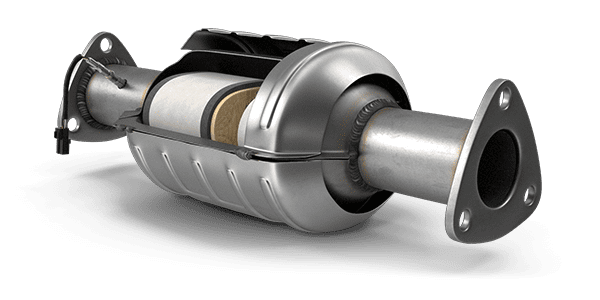
Catalytic Converters are a crucial component in your car’s exhaust system that helps reduce harmful emissions. It works by converting harmful gases such as carbon monoxide and nitrogen oxides into less harmful substances before they are released into the atmosphere. But is a catalytic converter always necessary for your car and its performance? In this article, we’ll examine the pros and cons of a catalytic converter and help you determine whether you should keep it or remove it from your exhaust system.
The decision of whether to keep or remove your catalytic converter will ultimately depend on your specific situation and needs. If you’re concerned about the environment and air quality, it may be best to keep it. However, if you’re more focused on performance and fuel efficiency, you may want to consider removing it.
It’s important to note that removing a catalytic converter is illegal in many countries, so you should always check local laws and regulations before making any changes to your car’s exhaust system.
Who checks and controls the inspection of Catalytic Converters in South Africa?
In South Africa, the South African National Regulator for Compulsory Specifications (NRCS) is responsible for checking and controlling the inspection of catalytic converters in vehicles. They enforce emissions standards to ensure that vehicles are operating within the legal requirements and that harmful pollutants are minimized.
If you were to remove the catalytic converter from your vehicle, there is a chance that you may be caught during a routine roadworthiness test or an emissions test. In some cases, the NRCS or local authorities may perform random checks on vehicles to ensure that they are in compliance with the emissions standards. If a vehicle is found to not meet the standards, the owner could face penalties, including fines or even imprisonment.
It’s important to note that removing a catalytic converter is illegal and could have serious consequences. If you’re considering making any modifications to your vehicle, it’s best to consult with a trusted mechanic or expert in the field to ensure that you are operating within the legal requirements and are not putting yourself or others at risk.
Pros and Cons of Catalytic Converters
Pros of a Catalytic Converter
- Improved Air Quality: A catalytic converter helps to reduce the number of harmful pollutants that are released into the atmosphere. This means that it contributes to improved air quality, making it safer for people to breathe and for the environment.
- Increased Fuel Efficiency: By reducing the number of harmful pollutants in the exhaust, a catalytic converter can also help to increase your car’s fuel efficiency. This can save you money in the long run, as you won’t have to fill up as often.
- Required by Law: In many countries, including the South Africa, the use of a catalytic converter is required by law. If you remove it, you may be in violation of emissions regulations and face penalties, including fines or even imprisonment.
Cons of a Catalytic Converter
- Reduced Performance: A catalytic converter can reduce the overall performance of your car, as it restricts the flow of exhaust gases. This can result in a decrease in power, acceleration, and speed.
- Increased Maintenance Costs: Catalytic converters can be expensive to replace and can also require regular maintenance to keep them functioning properly. This can add to the overall cost of owning and maintaining your car.
- Limited Availability of Replacement Parts: In some cases, it can be difficult to find replacement parts for a catalytic converter, especially if your car is older or has a unique exhaust system.
FAQS
What are the fault codes of a bad catalytic converter
| Fault Code | Description |
|---|---|
| P0420 | Catalyst System Efficiency Below Threshold (Bank 1) |
| P0430 | Catalyst System Efficiency Below Threshold (Bank 2) |
| P0421 | Warm-Up Catalyst Efficiency Below Threshold (Bank 1) |
| P0431 | Warm-Up Catalyst Efficiency Below Threshold (Bank 2) |
These are the codes you will see most often when the catalytic converter itself is no longer working efficiently.
Codes That Can Lead to Catalytic Converter Failure
Often the catalytic converter is not the root cause. Another fault damages the converter and then eventually triggers a P0420 or P0430.
Misfire Codes
- P0300 – Random/Multiple Cylinder Misfire
- P0301-P0312 – Cylinder-specific misfires
Unburnt fuel enters the catalytic converter and overheats it.
Oxygen Sensor Codes
- P0130-P0167
- P0136
- P0138
- P0140
- P0156
A faulty oxygen sensor can incorrectly indicate catalytic converter failure.
Fuel Mixture Codes
- P0171 – System Too Lean (Bank 1)
- P0174 – System Too Lean (Bank 2)
- P0172 – System Too Rich (Bank 1)
- P0175 – System Too Rich (Bank 2)
Running rich is particularly damaging to catalytic converters.
Symptoms You May See Alongside the Codes
- Check Engine Light
- Loss of power
- Poor acceleration
- Increased fuel consumption
- Sulphur/”rotten egg” smell from exhaust
- Engine overheating
- Rattling noise from the catalytic converter
- Failed emissions test
What is a catalytic converter and what does it do?
A catalytic converter reduces harmful emissions from your vehicle by converting toxic gases into less harmful substances before they exit the exhaust system. It’s a critical component for both environmental compliance and engine performance.
How do I know if my catalytic converter is failing?
Common signs include:
- Loss of engine power
- Strong sulfur or “rotten egg” smell
- Check engine light
- Poor fuel efficiency
- Rattling noises under the car
At e-CAR, our workshops perform a full diagnostic to confirm whether your catalytic converter needs replacement.
Can I drive with a faulty catalytic converter?
Driving with a failing catalytic converter is not recommended. It can:
- Damage your engine
- Increase fuel consumption
- Cause your vehicle to fail emissions tests
It’s best to book a car service as soon as symptoms appear.
How much does catalytic converter replacement cost?
The cost depends on:
- Vehicle make and model
- Type of catalytic converter
- Extent of damage
At e-CAR, we provide upfront pricing after a diagnostic, ensuring you only replace the catalytic converter if necessary.
What causes a catalytic converter to fail?
Failure is often caused by:
- Engine misfires
- Oil or coolant contamination
- Unburnt fuel entering the exhaust
- General wear and tear
Our workshops identify the root cause before replacing the catalytic converter to prevent repeat issues.
Can a catalytic converter be repaired instead of replaced?
In most cases, catalytic converters cannot be repaired and need replacement. However, at e-CAR we always run diagnostics first to confirm whether replacement is truly required.
How long does a catalytic converter last?
A catalytic converter typically lasts between 80,000 and 150,000 km, depending on driving conditions and maintenance.
Regular car service helps extend its lifespan.
Why is my car louder than usual?
A damaged or stolen catalytic converter can cause your car to become significantly louder. This is often one of the first noticeable signs of a problem.
Will a faulty catalytic converter affect fuel consumption?
Yes. A blocked or failing catalytic converter can reduce engine efficiency, leading to increased fuel consumption.
Do all e-CAR workshops replace catalytic converters?
Yes. At e-CAR, all our workshops diagnose and replace catalytic converters using proper testing procedures to ensure accurate repairs.
What are the maintenance costs associated with a catalytic converter?
As a rough estimate, you can expect to pay anywhere from R2,000 to R10,000 or more for catalytic converter replacement, including parts and labor
⚙️ Petrol vs Diesel Cats
✅ Petrol cars:
Use a three-way catalytic converter to handle CO, HC, and NOx emissions.
Failure is often due to misfires, burning oil, or using leaded fuel.
✅ Diesel vehicles:
Use an oxidation catalyst and a DPF (or a combined system).
The catalyst mostly handles CO and hydrocarbons — NOx is usually handled by other tech like SCR (AdBlue).
Biggest problem is the DPF — it clogs if the car doesn’t get hot enough to burn off soot.
🚫 Why Diesel Exhaust Systems Struggle
Short trips and low-speed driving stop the DPF/cat from reaching the regeneration temperature.
Poor-quality diesel fuel or oil leaks can cause soot overload.
Turbo failures can send oil into the exhaust, damaging the catalyst and DPF.
🔍 So, what usually fails?
For diesel, the DPF clogs more often than the oxidation catalyst fails outright. But a blocked DPF can cause high backpressure that stresses the entire exhaust system, including the catalyst.
✅ Bottom line
Petrol cars see more physical catalyst breakdown due to overheating or poisoning (misfires, unburnt fuel).
Diesels see more blockages — mostly soot-related — which can damage the cat if not fixed.
Is a catalytic converter required by law?
In many countries, including the United States, the use of a catalytic converter is required by law. If you remove it, you may be in violation of emissions regulations and face penalties.
Can removing a catalytic converter increase performance?
Yes, removing a catalytic converter can increase performance, as it reduces the restriction of exhaust gases and increases power, acceleration, and speed.
A failing or clogged catalytic converter can cause noticeable problems
1. Check Engine Light
The most obvious sign. Modern cars have oxygen sensors and other monitors — if the cat isn’t working properly, it’ll trigger a P0420 or similar code.
🚩 2. Poor Engine Performance
You may notice:
Reduced acceleration
Sluggish power at higher speeds
Struggling to climb hills
Engine feels like it’s “holding back”
This happens because a clogged cat restricts exhaust flow, which chokes the engine.
🚩 3. Decreased Fuel Economy
If exhaust can’t flow freely, your engine works harder and burns more fuel.
🚩 4. Rotten Egg Smell
A failing cat may produce a sulfur-like smell (rotten eggs). This happens when it can’t convert hydrogen sulfide in exhaust gases properly.
🚩 5. Rattling Noise
If the internal honeycomb breaks apart, you might hear a metallic rattling when you start the car or accelerate.
🚩 6. Failed Emissions Test
If you have emissions testing, a bad cat will fail — it won’t clean pollutants properly.
🔧 How to confirm?
If you suspect an issue:
✅ Get a diagnostic scan (OBD-II)
✅ Have a backpressure test done — too much exhaust backpressure means a blockage.
✅ A mechanic can also check with an infrared thermometer — a healthy cat is hotter at the outlet than the inlet when running.
✅ Black Smoke on a Diesel: What It Means
✅ Black Smoke on a Diesel: What It Means
Black smoke means unburnt fuel and excess soot in the exhaust.
Common causes: dirty injectors, faulty EGR, bad turbo seals, worn piston rings, or over-fuelling.
More soot → more particles → faster DPF loading.
🚫 Can This Damage the DPF?
Yes — indirectly. Here’s how it works:
The DPF’s job is to trap soot.
If your engine is producing too much soot, the DPF fills up faster than it can regenerate (burn off the soot).
If regeneration is incomplete or fails (often due to short trips), the soot turns to ash, which can’t be burned off and must be removed by physical cleaning.
Excess soot can clog the DPF channels, increasing exhaust backpressure — this can damage the turbo, sensors, and even the catalytic converter if the backpressure gets extreme.
🔥 So Black Smoke → Faster DPF Failure
The black smoke itself doesn’t “break” the DPF — but the soot overload blocks it. If you ignore this, your car might:
Go into limp mode
Burn more fuel
Risk cracking the DPF or catalyst brick due to overheating
🧰 What You Should Do
If you see black smoke on a modern diesel:
1️⃣ Check for boost leaks, dirty EGR, injectors, or turbo issues.
2️⃣ Fix the root cause to stop over-fuelling.
3️⃣ If the DPF is blocked, do a forced regeneration or professional clean.
4️⃣ Drive it hot — highway runs help the DPF reach regen temp (500–600°C).
💡 Tip: Lots of short trips = DPF nightmare. If your driving style is mostly city, your DPF will clog up sooner without the occasional long drive.
find a workshop near you
e-CAR Services
Car servicing
Routine, minor and major services to keep your vehicle properly maintained.
Car repairs
Full list of repair services
Aircon Regas
Restore your vehicle’s cooling performance with a professional aircon inspection and regas.
Mechanical Repairs
Professional repairs for worn, damaged or faulty mechanical components.
Brake Repairs
Inspection, maintenance and repair of brake pads, discs, fluid and related braking components.
Engine & Cooling
Diagnosis and repair of engine, radiator, water-pump, overheating and cooling-system problems.
Suspension Repairs
Repairs to shocks, wheel bearings, CV joints, and other suspension parts.
Transmission and Clutch Repairs
Diagnosis and repair of clutch, gearbox, transmission and drivetrain problems.
Diagnostics
Advanced diagnostic testing to identify warning lights, electronic faults, engine problems and performance issues.
Commercial-Vehicle Services
Servicing, maintenance and mechanical repairs for bakkies, LDVs and selected commercial vehicles.
Fleet Maintenance
Service a fleet of cars or trucks with a fast turnaround time.
e‑CAR workshops provide a broad range of servicing, maintenance, diagnostic and mechanical repair solutions. Services and vehicle capabilities vary by workshop, so check your local workshop’s profile before booking.
e-CAR Services
Car service
Car repairs
Full list of repair services
Aircon Regas
Restore your vehicle’s cooling performance with a professional aircon inspection and regas.
Mechanical Repairs
Professional repairs for worn, damaged or faulty mechanical components.
Brake Repairs
Inspection, maintenance and repair of brake pads, discs, fluid and related braking components.
Engine Cooling
Diagnosis and repair of engine, radiator, water-pump, overheating and cooling-system problems.
Suspension Repairs
Repairs to shocks, wheel bearings, CV joints, and other suspension parts.
Transmission & Clutch Repairs
Diagnosis and repair of clutch, gearbox, transmission and drivetrain problems.
Diagnostics
Advanced diagnostic testing to identify warning lights, electronic faults, engine problems and performance issues.
Commercial-Vehicle Services
Servicing, maintenance and mechanical repairs for bakkies, LDVs and selected commercial vehicles.
Fleet Maintenance
Service a fleet of cars or trucks with a fast turnaround time.
e‑CAR workshops provide a broad range of servicing, maintenance, diagnostic and mechanical repair solutions. Services and vehicle capabilities vary by workshop, so check your local workshop’s profile before booking.
Approvals & accreditations
Trust
e-CAR is accredited with RMI, MIWA approvals, and Right 2 Repair Supporter in SA for top-quality vehicle servicing and workmanship that meets industry standards.



Genuine car parts from our top brands






Terms and Conditions apply.
Please note that not all service centres offer the full range of services, and available services may vary between locations. We recommend confirming with your chosen service centre prior to booking your vehicle.